

Étienne Morin et le Manuscrit Baylot, Saint-Domingue, 1764
Vous vous intéressez à l’histoire de la Franc-maçonnerie en général et plus particulièrement à la genèse du Rite Ecossais Ancien et Accepté ? Cette intervention est faite pour vous ! Josef Wäges s’est récemment fait remarquer par la parution d’un livre sur la doctrine des Illuminés de Bavière. Une société secrète allemande qui ourdissait, dans les années 1780, des idées novatrices pour l’époque, comparables à nos Lumières françaises (l’Aufklärung allemande), un mouvement assez mal connu chez nous, ou si c’est le cas, bien souvent, pour de mauvaises raisons : certains esprits chagrins (pour ne pas dire plus simplement « imbéciles ») rattachant ce mouvement à un grand complot mondial, celui des « Illuminatis ».
abonnez-vous pour un accès à tout le catalogue !
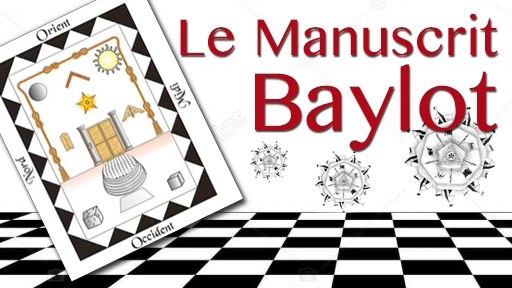
Le Grand Collège des Rites Ecossais du Grand Orient de France s’est récemment penché sur la biographie et la postérité maçonnique du grand voyageur Etienne Morin, l’un des fondateurs du REAA, mais aussi, pierre angulaire entre les maçonneries française, britannique et celle du Nouveau Monde.
Cette ambitieuse et passionnante étude n’aurait pu prétendre à une totale exhaustivité sans la présence et le regard d’un chercheur nord-américain : Josef Wäges, venant pour l’occasion de Dallas, apparaissait naturellement comme l’homme de la situation.

Un Touché-Coulé, non seulement entre les couronnes britanniques et françaises, mais aussi entre la Grande Loge de Londres et la Grande Loge de France* !
Au fil de cette allocution, qui prend la forme d’une véritable bataille navale au beau milieu de l’océan Atlantique, Josef Wäges tentera de rassembler ces fragments historiques, éparses, et de répondre aux épineuses questions : « d’où lui provenait ces rituels » et « de quels pouvoirs disposait Etienne – Steven - Morin pour les établir, comme il le fit, à Saint-Domingue » ?
Les « Elus Parfaits », premier haut-grade, à Bordeaux, en 1745 ?
Souhaitez-vous entrer dans cette plongée passionnante nous conduisant dans l’élaboration des premiers hauts-grades maçonniques tels que « l'Elu parfait », « le Sublime Prince du Royal Secret » et où deux manuscrits fondateurs interagissent : le manuscrit Francken et le manuscrit Baylot ?…
* précisons que la Grande Loge de France, que nous connaissons actuellement (GLDF) a été fondée un siècle plus tard, en 1894, donc bien que les noms soient identiques, il ne s’agit pourtant pas de la même obédience.
Enregistrement effectué lors du colloque « Etienne Morin, 1717-1771, un homme aux sources de l’Écossisme », au Grand Orient de France. Merci au réalisateur Michel Robin.
Extrait de la vidéo
One of the most elusive questions of the ancient and accepted Scottish rite concerns its origins. Where exactly did it come from, and from what source does its ritual emanate? Many scholars have rightfully determined that Étienne Morin, also known as Stephen Morin, is the founder of this system, but it is even less certain precisely from whence his authority came, let alone who Étienne Morin was. The truth is that we only have a partial picture of who he was and the circumstances concerning his authority to establish the rite.
Nevertheless, when one assembles all of the evidence and gathers still more, there is still enough light left in the fragments to project a more complete vision of the truth. The origins of the ancient and accepted Scottish rite are the most elusive questions of the ancient and accepted Scottish rite. Where exactly did it come from, and from what source does its ritual emanate? Many scholars have rightfully determined that Étienne Morin, also known as Stephen Morin, is the founder of this system, but it is even less certain precisely from whence his authority came, let alone who Étienne Morin was.
The truth is that we only have a partial picture of who he was and the circumstances concerning his authority to establish the rite. Nevertheless, when one assembles all of the evidence and gathers still more, there is still enough light left in the fragments to project a more complete vision of the truth. It is necessary to examine the manuscript of the Bailot closely and to compare it in particular to the Manuscript of Franconia.
It stands out that this manuscript is the core of what was to become the Order of the Royal Secret. To this end, Henri d'Écossais accepted it. Where precisely does Morin's Masonic authority come from, and under what circumstances? Morin is said to have received a constitution from London to establish an Écossais lodge in Bordeaux in 1745.
The trouble is that the original text of the constitution no longer remains. Alain Bernheim has suggested in his seminal paper, Notes on Early Freemasonry in Bordeaux, he suggests that the oldest known version of the constitution is found in the transcript of Regulations of a Perfect Écossais Lodge published by Sitwell, though his transcription seems to have been faulty in places. Within the context of our study, the date is of our primary concern.
Quote, done and attested in our grand Écossais Lodge the 8th and 2nd month of the year 5746. The date is of our primary concern. Quote, done and attested in our grand Écossais Lodge the 8th and 2nd month of the year 5746. Quote, done and attested in our grand Écossais Lodge the 8th and 2nd month of the year 5746.
Quote, done and attested in our grand Écossais Lodge the 8th and 2nd month of the year 5746. Quote, done and attested in our grand Écossais Lodge the 8th and 2nd month of the year 5746. Quote, done and attested in our grand Écossais Lodge the 8th and 2nd month of the year 5746. Quote, done and attested in our grand Écossais Lodge the 8th and 2nd month of the year 5746.
Quote, done and attested in our grand Écossais Lodge the 8th and 2nd month of the year 5746. Quote, done and attested in our grand Écossais Lodge the 8th and 2nd month of the year 5746. In light of the actual date, the text of these regulations represents a copy of the founding documents of what would later become the Élu Parfait, the first Écossais high degree system in France. These facts seem to be at odds with Morin's own account in his letter to the Élu Parfait dated June 24th, 1757, concerning his founding of a perfect Écossais Lodge.
These facts seem to be at odds with Morin's own account in his letter to the Élu Parfait dated June 24th, 1757, concerning his founding of a perfect Écossais Lodge. These facts seem to be at odds with Morin's own account in his letter to the Élu Parfait dated June 24th, 1757, concerning his founding of a perfect Écossais Lodge. Quote, in order that they may work towards the perfection of the royal art, I have given them the certificate that your respectable Lodge gave me on the date of July 25th, 1747, at the foot of which are the constitutions that were given to me dated July 25th, 1747, at the end of which are the constitutions which were handed to me by the Worshipful Mother Lodge of London dated June 25th, 1745.
The difference between the dates June 25th and July 8th seems problematic, though it is possible that Morin could have departed London and arrived in Bordeaux some 13 days later to establish the perfect Écossais Lodge. With this in mind, we shall consider how these facts align with another account of the legend concerning Morin's powers in a manuscript called Le Carré ou le Parfait Élu Écossais. Quote, this eminent degree was established in France by a venerable, respectable brother, Morin, who received it from William, Governor General of the English Islands, who had taken up residence in Antigua in 1744.
The Grand Lodge of England, having received it from William, had granted him authority to establish his Lodge of Perfection in 1745, when he was made a prisoner of war, and the said respectable brother, Morin, having spent some time in Le Carré, left and deposited the powers there in the respectable Écossais Lodge, which he had established in 1762 through the Grand Lodge of London, where the respectable brother, Morin, went on a voyage and established his permanent residence in Saint-Domingue in 1763.
Quote, this eminent degree was established in France by a venerable, respectable brother, Morin, who received it from William, Governor General of the English Islands, who had taken up residence in Antigua in 1744. The Grand Lodge of England, having received it from William, had granted him authority to establish his Lodge of Perfection in 1745, when he was made a prisoner of war, and the said respectable brother, Morin, having spent some time in Le Carré, left and deposited the powers there in the respectable Écossais Lodge, where the said respectable brother, Morin, had taken up residence in Saint-Domingue in 1745, when he was made a prisoner of war, and the said respectable brother, Morin, had taken up residence in Saint-Domingue in 1745, when he was made a prisoner of war, and the said respectable brother, Morin,